









Here is something that surprises people outside the industry: you cannot legally file a nail in the United States without a government-issued licence. Every state requires nail technicians to complete a specified number of training hours, pass both a written exam and a practical skills assessment, and maintain their licence through continuing education. The same is true for cosmetologists, estheticians, and barbers. In a $580 billion global industry built on personal services and repeat clients, the barrier to legal employment is not a degree—it is a licensing exam.
And those exams are harder than most people expect.
What the Licensing Exams Cover
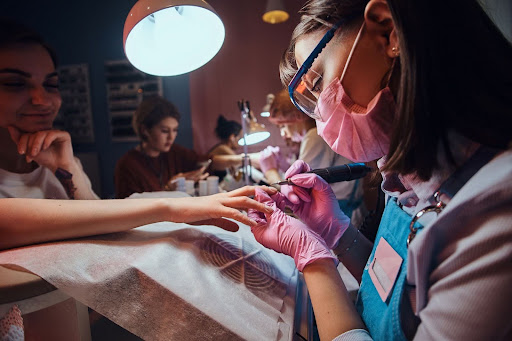
Nail technician and cosmetology licensing exams are developed and administered at the state level, with many states using standardised tests from PSI Services or NIC (National-Interstate Council of State Boards of Cosmetology). The written portion typically covers sanitation and infection control, nail anatomy and physiology, chemistry of products, safety procedures, and state-specific regulations. The practical portion requires candidates to demonstrate techniques on a live model or mannequin under the observation of a state examiner.
Training hour requirements vary significantly by state. California requires 400 hours for a manicurist licence. Alabama requires 750. Some states require over 1,000 hours for a full cosmetology licence. These are not weekend workshops—they represent months of full-time education, often at personal cost, before a graduate is even eligible to sit for the exam.
Pass Rates Tell the Real Story
First-time pass rates on cosmetology and nail tech exams vary by state and testing provider, but failure rates of 25 to 40 per cent on the written portion are not uncommon—particularly for candidates who underestimate the academic content. The written portion digs into sanitation procedures, chemical safety, and anatomy at a level that catches people off guard — especially candidates who spent most of their training hours perfecting their practical technique. Brushing up with exam prep resources before test day is one of the simplest ways to spot weak areas in the academic content and get comfortable with how the questions are actually structured. Language adds another layer.
While plenty of states offer the exam in Spanish, Vietnamese, Korean, and other languages, the technical terminology does not get any easier in translation. Words like onycholysis, methyl methacrylate, and quaternary ammonium compound require deliberate memorisation no matter which language you are reading them in.
Why Licensing Matters Beyond Compliance
Licensing in the beauty industry is not just about legality. It is about safety. Nail salons handle sharp instruments, chemical products, and procedures that can cause infection, allergic reactions, or injury if performed incorrectly. The licensing framework exists because the consequences of untrained practitioners working on the public are real and documented—from bacterial infections caused by improperly sanitised tools to chemical burns from mishandled acrylic products.
For clients, a licensed technician represents a verified standard of training. For the technician, the licence represents employability: salons, spas, and independent businesses all require it, and many states conduct inspections that include checking staff licences. Operating without one is a legal risk that no serious professional can afford.
A Credential That Launches Careers
The beauty industry offers something that few other fields can match: a relatively short training period, a clear licensing pathway, strong demand, and the ability to build a client-based business that grows with your reputation. Nail technicians and cosmetologists who invest in passing their exams on the first attempt—and who build the sanitation and safety knowledge that the written exam tests—are the ones who build sustainable careers in an industry that rewards skill, trust, and professionalism above almost everything else.